
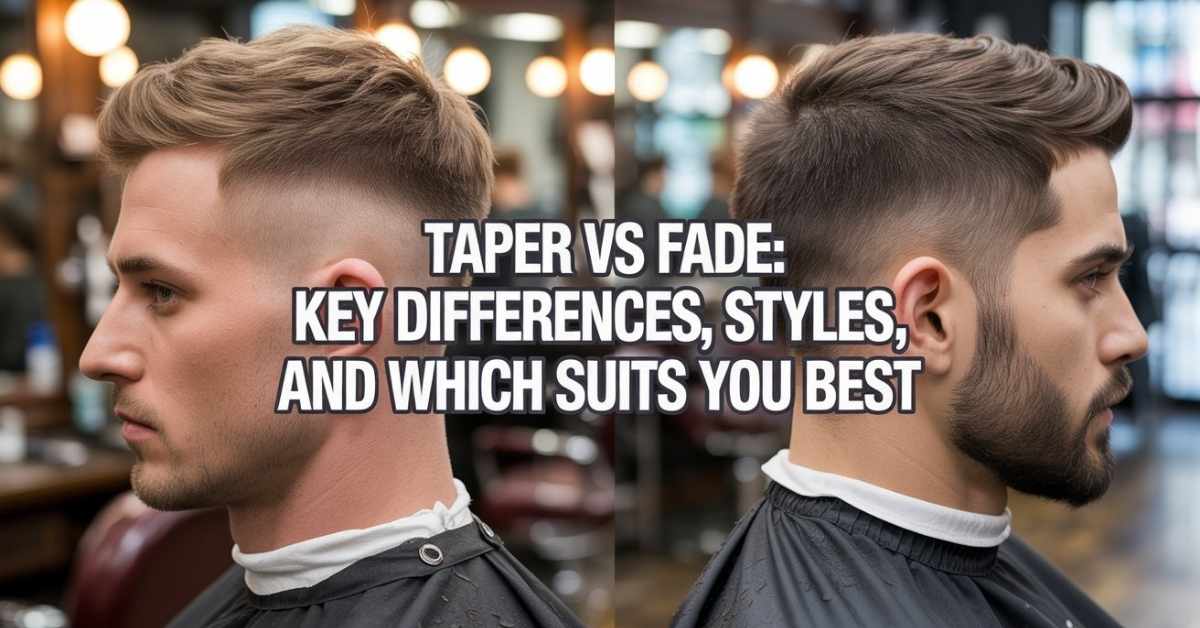
Taper vs fade haircut is a comparison nearly every man searches before visiting a barbershop. While both styles are clean, modern, and highly popular, they are not the same haircut. Many men end up disappointed simply because they didn’t understand what they were asking for. A taper and a fade create very different visual effects, require different levels of maintenance, and suit different lifestyles.
This detailed guide explains the real difference between a taper and a fade haircut, how each style works, who they are best for, and how to choose the right one so you can confidently get the haircut that truly fits you.
What Is a Taper Haircut?
A taper haircut is defined by a gradual and subtle reduction in hair length as it moves down the sides and back of the head. The blending is smooth and natural, and the hair never fades down to bare skin. Most of the tapering happens around the neckline, temples, and sideburns, leaving the rest of the hair fuller and more balanced.
Taper haircuts are widely considered classic and professional. They are popular among men who want a neat appearance that works in office environments, formal settings, and everyday life. One major advantage of a taper haircut is how naturally it grows out, maintaining its shape longer than more aggressive styles.
Low tapers keep the look extremely subtle, mid tapers add controlled definition, and high tapers create a cleaner outline without exposing skin. Classic and natural tapers remain timeless because they adapt well to changing trends.
READ MORE<<<Cheetah Print Buzz Cut: Trendy Animal Print Hair Styles 2025
What Is a Fade Haircut?
A fade haircut creates a strong contrast between hair lengths, gradually blending from longer hair down to very short lengths or completely to the skin. This sharp transition is what makes fades visually striking and modern. Fades rely on precise clipper work and clean blending techniques.
Fade haircuts are often chosen for their bold appearance. They highlight facial structure and work especially well with textured, curly, or thick hair. However, fades demand more frequent maintenance because even small regrowth can disrupt the clean blend.
Low fades offer a softer look, mid fades balance subtlety and sharpness, and high fades deliver maximum contrast. Skin fades, drop fades, burst fades, temp fades, and shadow fades give even more styling options while keeping the same fading concept.
Taper vs Fade Haircut: Key Differences That Matter
The most important difference between a taper and a fade haircut lies in blending technique, visual intensity, and upkeep. A taper blends gradually and naturally, while a fade creates a bold transition that draws attention.
The comparison below clearly shows how the two styles differ:
| Feature | Taper Haircut | Fade Haircut |
| Blending style | Soft and gradual | Sharp and high contrast |
| Skin exposure | No | Often yes |
| Overall look | Professional and classic | Trendy and modern |
| Maintenance | Lower | Higher |
| Barber visits | Every 4–6 weeks | Every 2–3 weeks |
Men who want a haircut that lasts longer and grows out cleanly often choose a taper. Those who prefer a crisp, fashion-forward look usually choose a fade.
Taper Fade vs Fade Haircut Explained
A taper fade is a hybrid style that combines elements of both haircuts. It keeps the natural taper around the neckline and temples while fading the hair slightly higher up. This creates a clean finish without the extreme contrast of a full skin fade.
The taper fade is ideal for men who want a modern look that still feels professional. It is one of the best compromise styles for those who like fades but want a more subtle appearance.
Which Haircut Is Right for You?
Choosing between a taper and a fade depends on your face shape, hair type, and daily lifestyle.
Men with round faces often benefit from fades because the sharper contrast adds structure. Square face shapes work well with both styles, though tapers help soften strong angles. Oval faces can wear almost any haircut comfortably, while longer faces usually look more balanced with low tapers or low fades.
Hair texture also plays a role. Taper haircuts suit straight and thin hair by maintaining fullness. Fade haircuts are especially effective for thick, curly, or textured hair because they remove bulk and enhance shape.
Lifestyle is often the deciding factor. Men working in professional or corporate environments usually prefer tapers for their clean and conservative look. Students, creatives, and trend-focused individuals often choose fades for their bold and modern appearance.
Taper vs Fade for Professional and Casual Looks
A taper haircut is widely considered a business-appropriate hairstyle. Its natural blending works well with formal dress codes and professional settings. A fade haircut leans more casual and expressive, making it popular in modern fashion and street-style culture.
Many men choose a low fade or taper fade to balance professionalism with contemporary style, allowing flexibility across different environments.
Maintenance, Cost, and Long-Term Commitment
Maintenance is a critical factor when deciding between a taper and a fade. Fade haircuts usually need touch-ups every 2–3 weeks to keep the blend sharp and clean. Taper haircuts last longer and typically require trimming every 4–6 weeks, making them more cost-effective over time.
If you prefer minimal upkeep and fewer barber visits, a taper haircut is the better option. If you enjoy a consistently sharp look and regular grooming, a fade haircut may be worth the commitment.
How to Ask Your Barber for a Taper or Fade
Clear communication with your barber is essential. When asking for a taper, explain how subtle you want it and where the taper should start. When requesting a fade, specify the fade height and whether you want skin exposure.
Showing reference photos helps ensure your barber understands exactly what you want and reduces the risk of miscommunication.
“A great haircut starts with a clear conversation.”
Common Myths About Taper and Fade Haircuts
One common myth is that taper haircuts are outdated, when in reality they remain one of the most timeless men’s styles. Another misconception is that fades only suit younger men, even though low fades can look refined at any age. The biggest myth is that tapers and fades are the same haircut, which they clearly are not.
Pros and Cons of Each Style
A taper haircut offers a clean, professional look with lower maintenance, but it may feel too subtle for those who want bold style. A fade haircut delivers sharp definition and modern appeal but requires frequent upkeep and higher long-term cost.
Popular Hairstyles That Work with Tapers and Fades
Both haircuts pair well with popular men’s styles such as the pompadour, slick back, textured crop, curly top, and fringe. The difference lies in how dramatic you want the sides and back to appear.
FAQs
Is a taper better than a fade?
taper is more subtle and professional, while a fade is bold and modern.
Which haircut lasts longer?
Tapers generally last 4–6 weeks, while fades need touch-ups every 2–3 weeks.
Can a taper look like a fade?
Yes, a high taper or taper fade can resemble a fade without exposing skin.
What is a taper fade haircut?
taper fade blends a subtle taper at the edges with a soft fade higher up.
Conclusion
When deciding between a taper vs fade haircut, there is no one-size-fits-all answer. A taper provides a classic, clean, and professional appearance, while a fade offers bold contrast and modern style. The right choice depends on your face shape, hair type, lifestyle, and maintenance preference.
If you value longevity and subtlety, choose a taper haircut. If you want sharp definition and trend-driven style, a fade haircut is the better choice.
Leave a Reply