
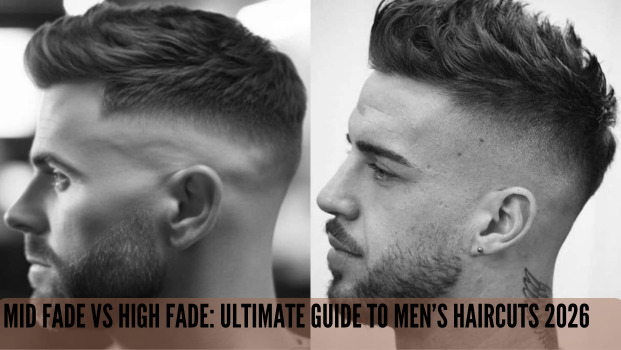
When it comes to men’s hairstyles, mid fade vs high fade is one of the most searched comparisons online. Both fade haircuts create very different visual effects and can transform your look, whether you want a subtle, professional style or a bold, statement-making haircut. Understanding the differences, styling options, maintenance, and how each suits your face shape and hair type is essential to choosing the right fade.
What Is a Mid Fade?
A mid fade starts around the midpoint of the head, creating a smooth transition from longer hair on top to shorter sides. This style is versatile and balanced, offering a professional yet stylish appearance. It works well with textured tops, comb-overs, and quiffs. Men with oval or square face shapes often find mid fades flattering because they enhance proportion without exaggerating features.
In practice, the mid fade haircut is easier to maintain than a high fade, as it grows out subtly. Popular variations include the mid taper fade, mid drop fade, and mid fades paired with textured tops. According to BarberStake (January 12, 2025), the mid fade remains one of the most recommended styles for men seeking a classic yet modern look.
Key Features of a Mid Fade
| Feature | Mid Fade |
| Fade Start | Mid-head |
| Visual Impact | Subtle and balanced |
| Maintenance | Medium |
| Face Shape Suitability | Oval, square |
| Popular Styles | Mid taper fade, mid drop fade, textured top |
READ MORE<<<Mid Fade Haircuts: Top style, Trends & Tips for the men 2025
What Is a High Fade?
A high fade starts near the temples or upper sides of the head, creating a sharp contrast between the longer top and the closely cut sides. The high fade is bold, edgy, and modern, perfect for men looking to make a statement with their haircut. It works especially well with buzz cuts, slick backs, and pompadours, highlighting the shape of the head and jawline.
While visually striking, high fades require more frequent maintenance, as the sharp contrast becomes noticeable as hair grows out. Popular high fade styles include the high skin fade, high burst fade, and high taper fade. Grooming Relentless (September 15, 2025) notes that high fades are ideal for men with round or long face shapes, as they can elongate and balance the face.
Key Features of a High Fade
| Feature | High Fade |
| Fade Start | Near temples/upper sides |
| Visual Impact | Bold and dramatic |
| Maintenance | High |
| Face Shape Suitability | Round, long |
| Popular Styles | High skin fade, high burst fade, high taper fade |
Mid Fade vs High Fade: Side by Side Comparison
Comparing mid fade vs high fade side by side highlights their unique features and helps you choose based on style preference, face shape, and hair type.
| Feature | Mid Fade | High Fade |
| Fade Start | Mid-head | Near temples |
| Visual Impact | Subtle and balanced | Bold and edgy |
| Maintenance | Medium | High |
| Face Shape Suitability | Oval, square | Round, long |
| Styling Versatility | Works with most hairstyles | Works with bold, modern styles |
| Hair Type | Thick, wavy, or straight | Textured, straight, curly |
This comparison shows that the mid fade provides a balanced and versatile look, while the high fade delivers a dramatic, fashion-forward effect.
Pros and Cons of Each Fade
The mid fade offers a subtle, polished appearance suitable for nearly any occasion. It blends seamlessly with textured or classic hairstyles and requires medium maintenance, making it ideal for men who want a professional look without frequent barber visits. However, it is less bold than a high fade and may not stand out in fashion-forward environments.
In contrast, the high fade creates a modern, edgy style that draws attention. It highlights facial features such as the jawline and cheekbones, especially when paired with buzz cuts or pompadours. The downside is that it requires more frequent trims and is less suitable for conservative professional settings.
Choosing the Right Fade for Your Face Shape
Face shape plays a critical role in determining which fade works best. For round faces, high fades create an elongating effect, balancing facial proportions. Oval faces benefit from mid fades, as they maintain natural symmetry. Square faces also pair well with mid fades, complementing strong jawlines without exaggeration. Men with long or oblong faces may prefer high fades to add width at the sides, while heart-shaped faces can be softened with a mid fade to highlight cheekbones.
Hair Type Considerations
Different hair textures affect how a fade looks. Thick hair pairs well with either mid or high fades, though mid fades may be easier to manage. Thin hair can benefit from a high fade, which creates a fuller-looking top due to the sharp contrast. Curly hair is often best complemented by a mid fade to maintain natural curl shape, while straight hair works exceptionally with high fades that emphasize clean lines.
Tip: Mid fades are ideal for medium-length textured tops, and high fades are perfect for short, structured styles.
Popular Styling Ideas
Mid fades can be paired with textured tops, quiffs, or comb-overs, while high fades work with buzz cuts, slick backs, or pompadours. Using styling products like pomade, matte clay, or styling cream ensures that your fade maintains its desired volume, hold, and texture throughout the day. According to social media trends, TikTok video 7285667045348216066 demonstrates modern fade variations for inspiration.
Maintenance and Barber Tips
Maintaining your fade depends on the type. Mid fades typically require trimming every 3–5 weeks to preserve the balanced look, while high fades need 2–3 week trims to keep the bold contrast. When visiting the barber, specify the fade start point, desired contrast, and top style to avoid miscommunication. Using terms like “mid taper fade” or “high burst fade” ensures your haircut turns out exactly as intended.
Common Fade Variations
Fade variations enhance both mid and high fades. A drop fade drops behind the ear for a curved effect, while a burst fade surrounds the ear in a circular shape. Temp fades focus on the temples, skin fades go down to the skin for bold contrast, and undercut fades combine fade with longer top length for dramatic effect. These variations allow customization while maintaining the core characteristics of either a mid or high fade.
Mid Fade vs High Fade for Different Lifestyles
Mid fades are suitable for professional or conservative environments, providing a subtle, versatile appearance. High fades make a fashion-forward statement, perfect for casual settings, bold looks, or trend-conscious individuals. Both fades can accommodate active lifestyles, but high fades require more attention to upkeep due to rapid regrowth showing contrast quickly.
Frequently Asked Questions
How do I choose between mid fade and high fade?
Consider your face shape, hair type, styling preference, and maintenance routine.
Can I maintain a fade at home?
It’s possible with professional clippers, but barber guidance ensures precision.
Which fade grows out faster?
High fades show regrowth faster due to the stark contrast between the top and sides.
Can high fades work with curly hair?
Yes, as long as curls are trimmed and styled appropriately.
What’s trending in 2026?
Mid fades with textured tops and high fades paired with buzz cuts or pompadours dominate contemporary styles.
Conclusion
Choosing between a mid fade vs high fade comes down to personal style, face shape, hair type, and lifestyle. Mid fades offer subtle, versatile, and professional looks, while high fades deliver bold, edgy, and modern styles. Consulting a skilled barber or using inspiration from social media, including TikTok tutorials like 7285667045348216066, can help you select the fade that enhances your features and boosts confidence. A well-executed fade is more than just a haircut—it’s a statement, reflecting style, personality, and attention to detail.
Leave a Reply