
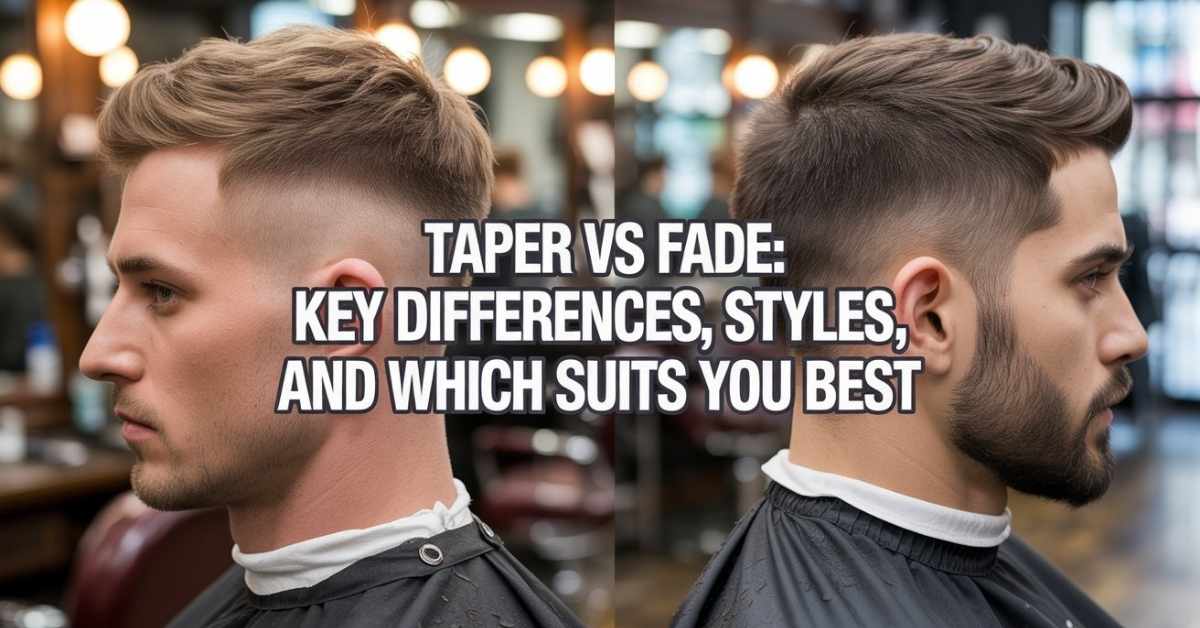
Taper vs fade is one of the most searched questions in men’s grooming. While both haircuts offer a clean and stylish appearance, knowing their differences can help you choose the perfect look for your hair type, face shape, and lifestyle. In this guide, we will cover everything from styles, maintenance, barber tips, and expert recommendations so you can confidently decide on your next haircut.
What is a Taper Haircut?
A taper vs fade haircut gradually shortens hair along the sides and back while keeping more length on top. Unlike a fade, a taper never reaches the skin, offering a subtle and classic look. Tapers are categorized into low, mid, and high tapers. Low tapers shorten hair just above the ears for a neat, professional appearance. Mid tapers blend around the temple level, creating a balanced look suitable for most face shapes. High tapers start near the crown, providing a more pronounced contrast.
Tapers work with straight and wavy hair and are ideal for men seeking a low-maintenance yet polished style. Maintenance typically requires a trim every 4–6 weeks. As one barber notes, “A taper is timeless, perfect for casual or professional settings.”
What is a Fade Haircut?
A fade haircut gradually reduces hair length from the top down to the skin, creating a sharp contrast between long top hair and short sides. Fades are more versatile than tapers, with several types: low fade, mid fade, high fade, skin/bald fade, drop fade, burst fade, temp fade, and undercut fade. Low fades start above the ears, mid fades blend around the temples, and high fades begin near the crown for a bold, edgy style. Skin or bald fades shave hair down to the scalp for maximum contrast.
Fades are ideal for modern, fashion-forward men, including those with curly or thick hair. Maintenance is frequent, usually every 2–3 weeks, to keep the clean, sharp look intact. A celebrity barber explains, “The fade is all about precision. It gives any haircut a fresh, stylish edge.”
Taper vs Fade: Key Differences
Understanding the key differences is essential to choosing the right haircut. Tapers offer a gradual transition and minimal skin exposure, whereas fades create a high-contrast look and often reach the skin. Necklines and sideburns are subtle in tapers but well-defined in fades. Tapers typically require trims every 4–6 weeks, while fades need touch-ups every 2–3 weeks. Both hairstyles suit a variety of face shapes and hair textures, but fades are more modern and trend-driven.
| Feature | Taper | Fade |
| Hair length transition | Gradual | Sharp |
| Skin exposure | Minimal | Often down to skin |
| Neckline & sideburns | Subtle | Defined |
| Maintenance | 4–6 weeks | 2–3 weeks |
| Suitable face shape | Oval, Round, Square | All |
| Hair type | Straight, Wavy | Straight, Wavy, Curly |
Tapers are understated and professional, while fades create a bolder, contemporary look. Choosing between them depends on personal style, lifestyle, and maintenance preference.
Styles and Variations of Tapers and Fades
For those seeking more variety, understanding different taper and fade styles is crucial. Low tapers are subtle, whereas low fades create sharper lines. Mid tapers are balanced, while mid fades offer a trendy edge. High tapers maintain a pronounced length difference, whereas high fades deliver a striking contrast. Specialty fades such as drop fade, burst fade, temp fade, and undercut fade provide creative styling options. These variations suit professional, casual, and edgy looks, allowing each man to tailor the haircut to his lifestyle and hair type.
Choosing Between a Taper and a Fade
Selecting the right haircut depends on lifestyle, hair type, and face shape. Office workers may prefer a taper for its professional subtlety, while trendsetters and younger men often choose fades for a bold statement. Thick hair can hold a fade well, while thinner hair may benefit from the gradual transition of a taper. Face shape matters; oval, round, and square faces can pull off both styles, but fades emphasize sharper angles. Curly or wavy hair pairs well with a fade for added contrast, whereas tapers maintain a softer, classic appearance.
Case Study: John, a 28-year-old software engineer, chose a mid taper. It required fewer visits to the barber and offered a professional, office-appropriate look, proving tapers are ideal for low-maintenance lifestyles.
Maintenance Tips for Tapers and Fades
Maintenance is essential for keeping these haircuts sharp. Tapers require a trim every 4–6 weeks, while fades need attention every 2–3 weeks. Use light styling products to maintain texture and control, and avoid over-washing to preserve natural oils. Sharing reference images with your barber ensures accuracy. Proper maintenance guarantees that both styles remain polished and stylish.
Barber Communication Guide
Effectively communicating with your barber is crucial. Specify the haircut type, taper or fade, and the level: low, mid, or high. Discuss the amount of skin exposure and provide images for reference. A clear example is: “I want a mid fade with a high taper on top, keeping the sides clean and short.” Proper communication ensures a haircut that matches expectations perfectly.
Trends and Modern Styles
Fades continue to dominate in 2025 as a trend-forward haircut, while tapers remain timeless classics. Many men now opt for a taper fade, combining the elegance of a taper with the boldness of a fade. Celebrities and influencers showcase these hybrid cuts, proving that style and professionalism can coexist.
Frequently Asked Questions
Is a taper better than a fade?
Tapers are subtle and professional, fades are bold and trendy.
Which haircut lasts longer?
Tapers last 4–6 weeks, fades need 2–3 week touch-ups.
Can a taper look like a fade?
Yes, a taper can mimic a subtle fade without shaving to the skin.
What haircut suits my face shape?
Fades emphasize angles for oval/round faces, tapers balance square faces.
Conclusion
Choosing between a taper vs fade depends on your personal style, hair type, face shape, and maintenance preference. Opt for a taper for a classic, low-maintenance, professional look, or choose a fade for a modern, bold, high-contrast style. Both hairstyles are versatile, stylish, and can be tailored to fit your personality. Show this guide to your barber to achieve the perfect cut.
Leave a Reply